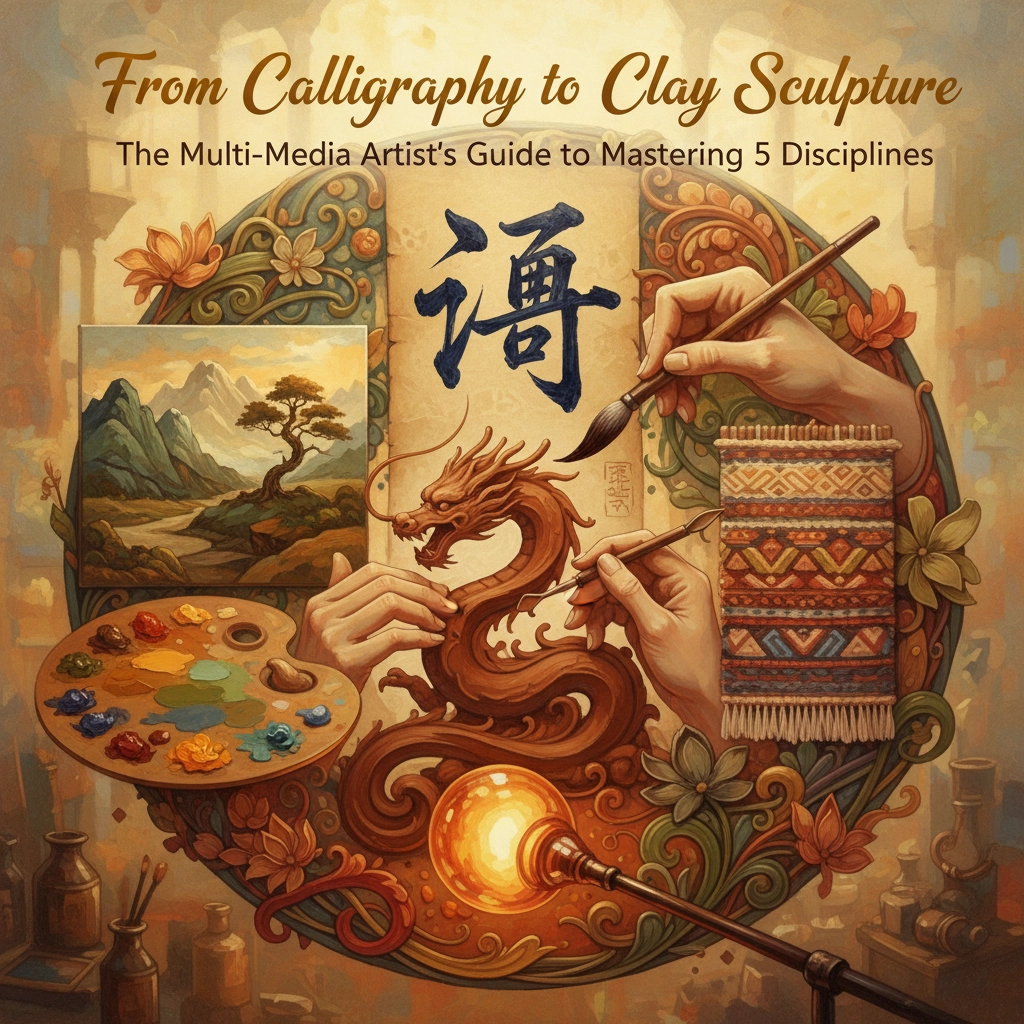
From Calligraphy to Clay Sculpture: The Multi-Media Artist’s Guide to Mastering 5 Disciplines

by | Nov 8, 2025 | Art, Artist, Blog, Calligraphy

Written By Chau Ming Beck

Chau Ming Beck

heroImage

In today’s art world, the boundaries between traditional disciplines are dissolving faster than watercolor on wet paper. Multi-media artists are leading this creative revolution, weaving together techniques from vastly different traditions to create something entirely new and personally meaningful.

But here’s the thing about mastering multiple art forms, it’s not about becoming a jack-of-all-trades and master of none. It’s about understanding how each discipline can inform and strengthen the others, creating a rich vocabulary of expression that speaks to both your heritage and your vision for the future.

Why Multi-Disciplinary Mastery Matters

When you limit yourself to just one medium, you’re essentially trying to tell every story with the same voice. Imagine a musician who only knows how to play one note, or a chef who only uses salt to season food. Sure, they might become incredibly skilled at that one thing, but think of all the flavors they’re missing.

Multi-media art allows you to match your technique to your message. Sometimes your story needs the flowing grace of watercolor. Other times, it demands the bold permanence of clay. The key is developing fluency in multiple languages of art so you can choose the perfect one for each creative moment.
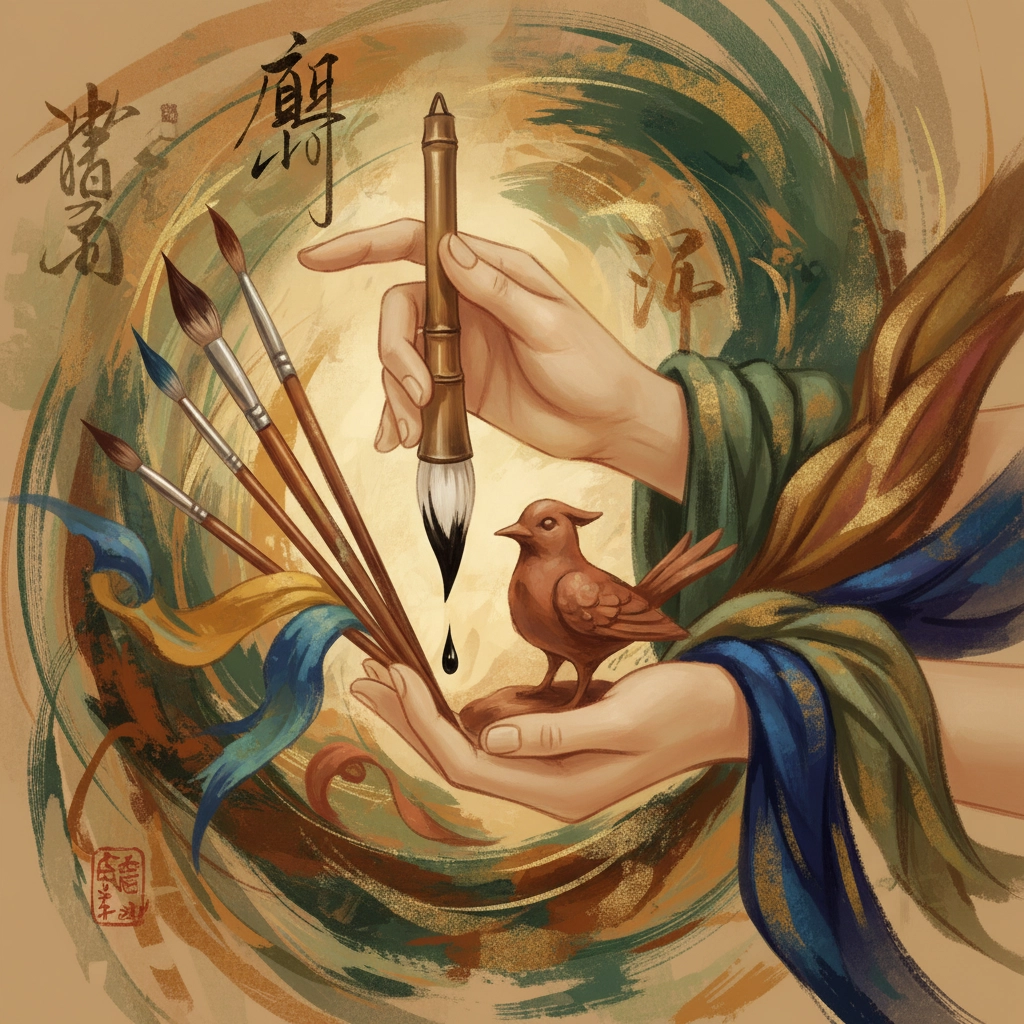
image_1

Discipline 1: Calligraphy – The Foundation of Flow

Let’s start with calligraphy, because if there’s one discipline that teaches you about the relationship between intention and execution, it’s this ancient art form. Whether you’re working in traditional Chinese brush painting or Western calligraphy, you’re learning something fundamental about control and release.

In calligraphy, every stroke carries weight, literally and figuratively. You can’t rush it, you can’t fake it, and you definitely can’t undo it once the ink hits the paper. This teaches you to be present in your art-making process, something that will serve you well no matter what medium you’re working in.

Getting Started: Begin with basic brush techniques and simple characters or letters. Focus on breath work, your breathing should sync with your brush strokes. Practice the same character 50 times before moving on. Yes, it’s repetitive, but you’re building muscle memory that will enhance every other artistic skill you develop.

Cross-Pollination Benefits: The flow and rhythm you develop in calligraphy will transform your painting technique, improve your sketching confidence, and even influence how you approach three-dimensional forms.

Discipline 2: Clay Sculpture – Working with Resistance

If calligraphy teaches you about flow, clay sculpture teaches you about resistance: and how to work with it rather than against it. Clay has its own personality. It tells you when it’s too wet, too dry, or when you’re pushing too hard. Learning to listen to your materials is a crucial skill for any multi-media artist.

Sculpture also forces you to think in three dimensions from the very beginning. While painters often struggle to create the illusion of depth, sculptors start with actual depth and learn to manipulate space, light, and shadow in real time.
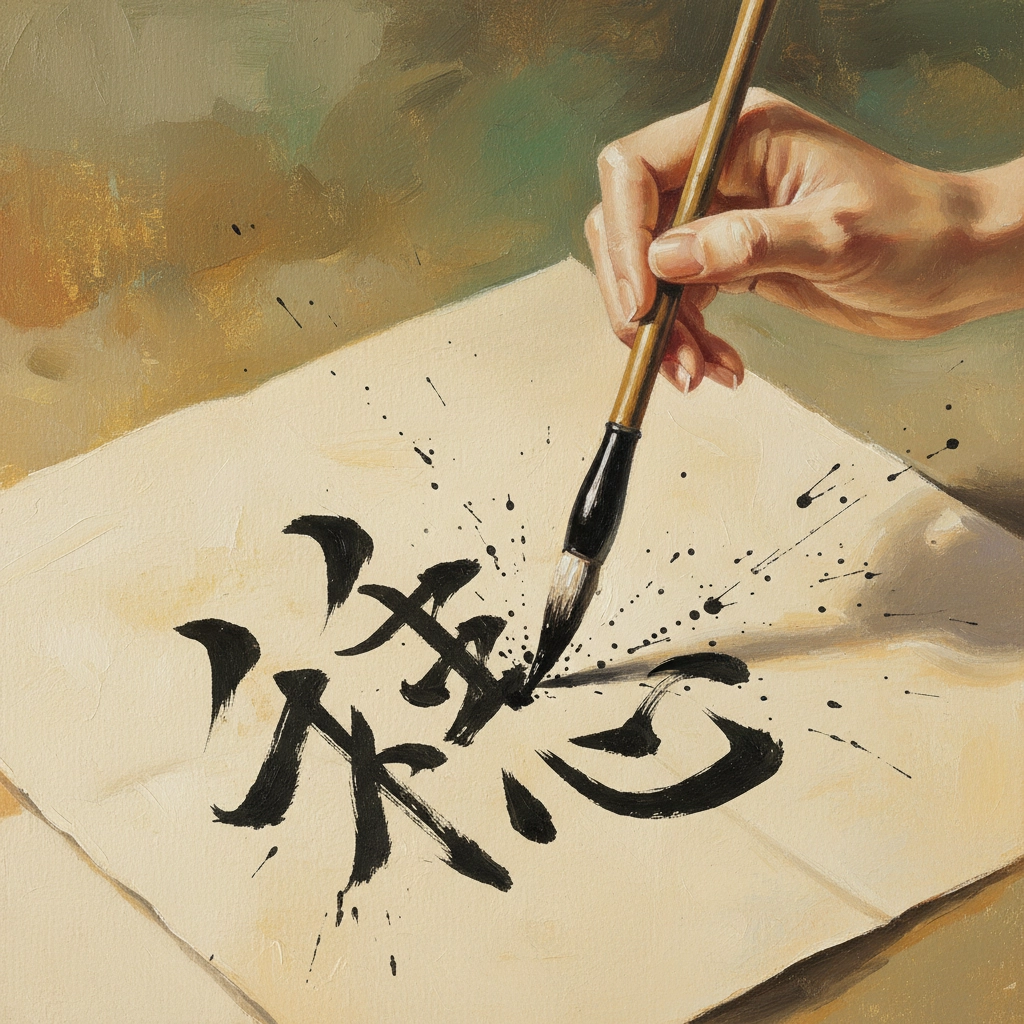
image_2

Getting Started: Don’t jump straight into the pottery wheel: that’s like trying to run before you can walk. Start with hand-building techniques like pinch pots and coil construction. Work on small pieces first, focusing on getting a feel for how clay responds to different amounts of pressure and moisture.

Cross-Pollination Benefits: The spatial awareness you develop will revolutionize your drawing and painting. You’ll start seeing highlights and shadows differently, and your understanding of form will add depth to every other medium you work with.

Discipline 3: Watercolor Painting – Embracing the Unpredictable

Watercolor is where control freaks go to find enlightenment. This medium will humble you faster than a meditation retreat because it demands that you surrender to the process while still maintaining enough skill to guide the outcome.

The beauty of watercolor lies in its transparency and spontaneity. Colors blend in ways you never planned, creating happy accidents that often become the most compelling parts of your piece. This teaches you to see opportunities in unexpected outcomes: a mindset that’s invaluable in all creative work.

Getting Started: Learn wet-on-wet and wet-on-dry techniques separately before combining them. Practice color mixing on small studies rather than jumping into large compositions. Most importantly, embrace the “mistakes”: they’re often showing you possibilities you never would have discovered through careful planning.

Cross-Pollination Benefits: Watercolor’s unpredictability will make you more flexible and adaptive in other mediums. The color theory knowledge transfers directly to other painting techniques, and the loose, flowing approach can bring spontaneity to even structured disciplines like calligraphy.
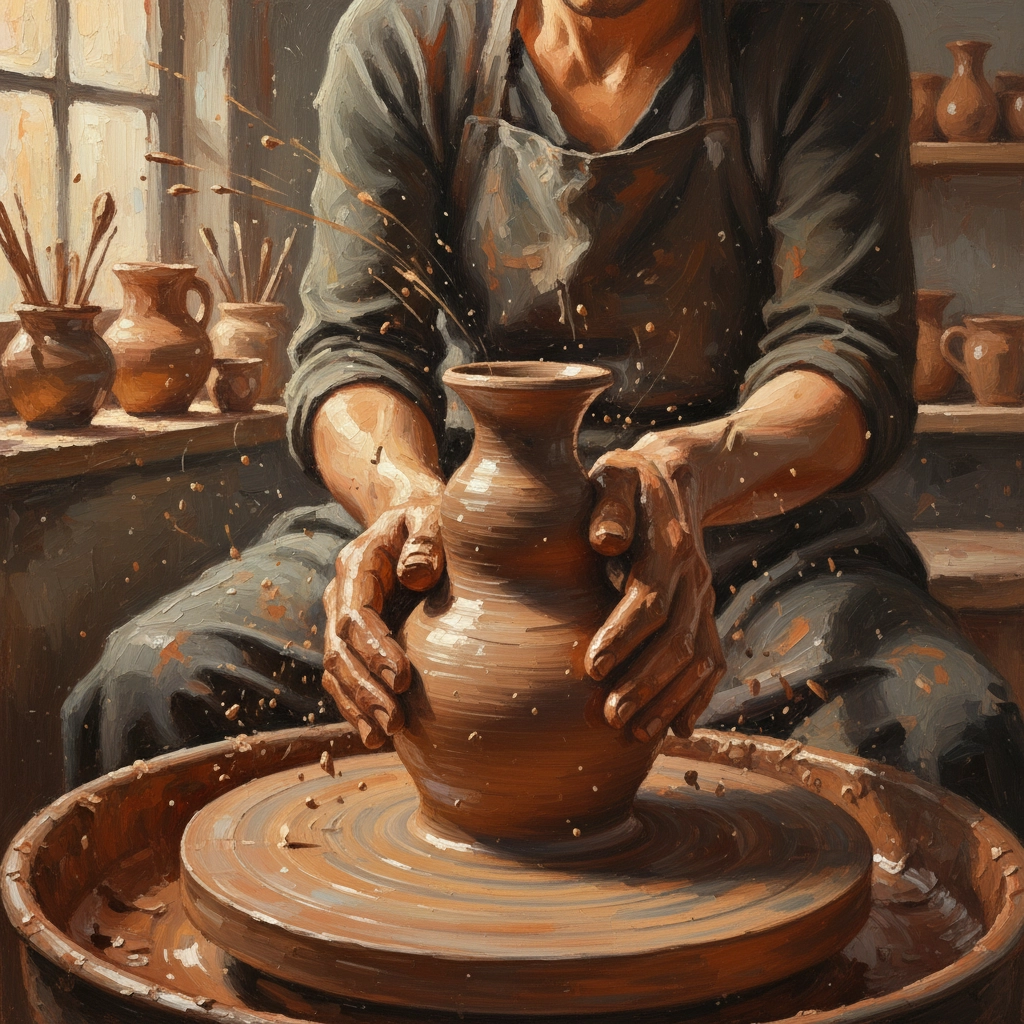
image_3

Discipline 4: Digital Mixed Media – Bridging Traditions

Here’s where ancient meets modern. Digital mixed media isn’t about replacing traditional techniques: it’s about extending them into new territories. When you combine hand-drawn elements with digital manipulation, traditional textures with modern compositions, you’re creating art that speaks to our contemporary moment while honoring historical traditions.

The digital realm offers unlimited experimentation without the cost of materials. You can try a hundred different color combinations, layer techniques, or compositional approaches without wasting paper or paint. This freedom to experiment will make you braver in all your other work.

Getting Started: Don’t try to learn complex software all at once. Pick one program (Procreate, Photoshop, or even free alternatives like GIMP) and focus on mastering basic layers, blending modes, and brush settings. Start by digitally enhancing traditional work you’ve already created.

Cross-Pollination Benefits: Digital work teaches you about layering and transparency in ways that will improve your traditional painting. The undo function encourages experimentation that will make you more willing to take risks in permanent media.

Discipline 5: Textile and Fiber Arts – Adding Dimension and Texture

The textile arts might seem like an unexpected addition, but they offer something unique: the ability to create art that people can touch, wear, and live with. Whether you’re exploring traditional techniques like embroidery and weaving or contemporary approaches like fabric collage, you’re adding a tactile dimension to your artistic vocabulary.

Textile work also connects you to cultural traditions in a very direct way. The techniques passed down through generations of makers carry stories and cultural knowledge that can deeply inform your artistic practice.
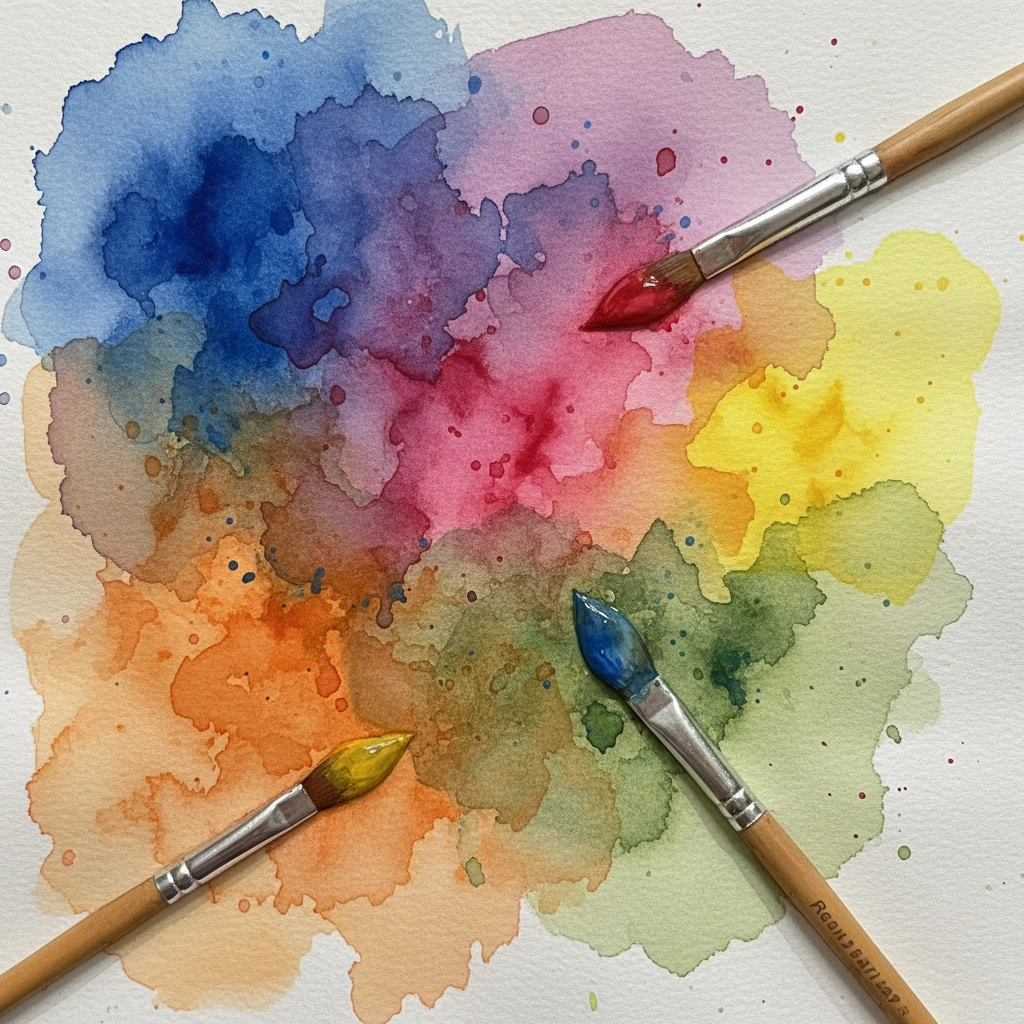
image_4

Getting Started: Begin with simple embroidery stitches on found fabrics. Create small fabric collages combining different textures and materials. The key is to focus on how different materials feel and behave, not just how they look.

Cross-Pollination Benefits: Working with fabric will teach you about texture in ways that will transform your painting and drawing. The layering techniques translate beautifully to mixed media work, and the connection to cultural traditions can add meaning and depth to all your artistic expression.

The Integration Challenge

Now here’s where it gets really interesting. The goal isn’t just to become competent in five different areas: it’s to start combining them in ways that create something entirely new. What happens when you incorporate calligraphy into your clay work? How might watercolor techniques inform your digital compositions?

The magic happens in the intersections. Your calligraphy might inspire the flowing lines in a sculpture. Your experience with clay’s resistance might lead you to work against the natural flow of watercolor in interesting ways. The digital realm might become the place where all your traditional techniques meet and dance together.

Building Your Multi-Disciplinary Practice

Start Small: Don’t try to master everything at once. Pick two disciplines that intrigue you and spend three months exploring how they might inform each other.

Document Everything: Keep a visual journal of experiments, happy accidents, and cross-pollination discoveries. This becomes your personal encyclopedia of techniques and possibilities.

Share Your Process: The artistic community is incredibly supportive of artists who are willing to show their learning process, not just their finished pieces. Your journey might inspire someone else’s breakthrough.

Stay Curious: The moment you think you’ve mastered a technique is the moment you stop growing. Each discipline has depths that can be explored for a lifetime.
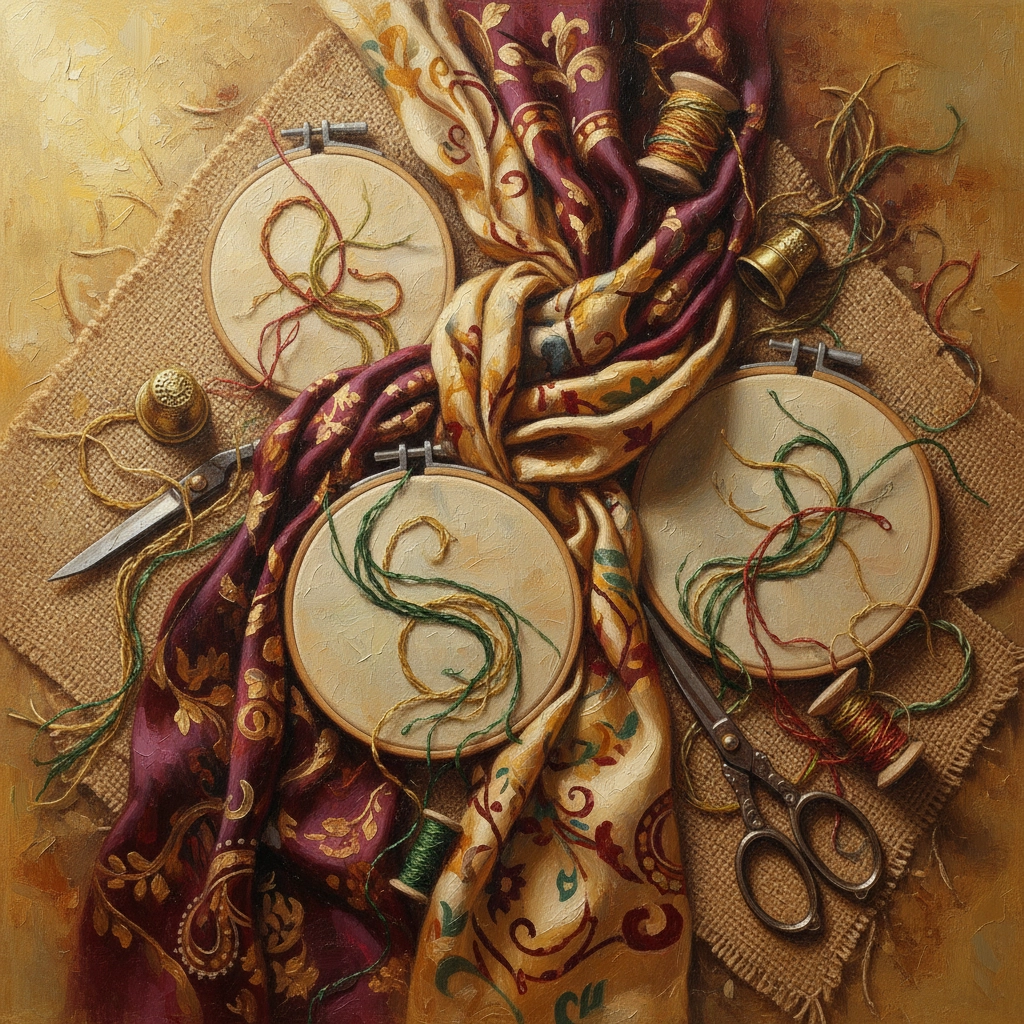
image_5

The Path Forward

Mastering multiple artistic disciplines isn’t about collecting skills like trophies. It’s about building a rich, nuanced voice that can speak to the complexity of human experience. When you combine the meditative focus of calligraphy with the earthy groundedness of clay work, the spontaneous joy of watercolor with the infinite possibilities of digital media, and the cultural richness of textile arts, you’re creating art that could only come from you.

Your unique combination of life experience, cultural background, and artistic training means that your multi-disciplinary approach will be unlike anyone else’s. That’s not just the goal: that’s the entire point. In a world where AI can replicate individual techniques, your human ability to synthesize multiple forms of expression into something personally meaningful becomes your greatest artistic asset.

The journey from calligraphy to clay sculpture and beyond isn’t just about expanding your technical abilities. It’s about expanding your capacity to translate the full spectrum of human experience into visual form. And in that translation, you might just discover not only new ways of making art, but new ways of understanding yourself and the world around you.

heroImage

In today’s art world, the boundaries between traditional disciplines are dissolving faster than watercolor on wet paper. Multi-media artists are leading this creative revolution, weaving together techniques from vastly different traditions to create something entirely new and personally meaningful.

But here’s the thing about mastering multiple art forms: it’s not about becoming a jack-of-all-trades and master of none. It’s about understanding how each discipline can inform and strengthen the others, creating a rich vocabulary of expression that speaks to both your heritage and your vision for the future.

Why Multi-Disciplinary Mastery Matters

When you limit yourself to just one medium, you’re essentially trying to tell every story with the same voice. Imagine a musician who only knows how to play one note, or a chef who only uses salt to season food. Sure, they might become incredibly skilled at that one thing, but think of all the flavors they’re missing.

Multi-media art allows you to match your technique to your message. Sometimes your story needs the flowing grace of watercolor. Other times, it demands the bold permanence of clay. The key is developing fluency in multiple languages of art so you can choose the perfect one for each creative moment.

image_1

Discipline 1: Calligraphy – The Foundation of Flow

Let’s start with calligraphy, because if there’s one discipline that teaches you about the relationship between intention and execution, it’s this ancient art form. Whether you’re working in traditional Chinese brush painting or Western calligraphy, you’re learning something fundamental about control and release.

In calligraphy, every stroke carries weight, literally and figuratively. You can’t rush it, you can’t fake it, and you definitely can’t undo it once the ink hits the paper. This teaches you to be present in your art-making process, something that will serve you well no matter what medium you’re working in.

Getting Started: Begin with basic brush techniques and simple characters or letters. Focus on breath work, your breathing should sync with your brush strokes. Practice the same character 50 times before moving on. Yes, it’s repetitive, but you’re building muscle memory that will enhance every other artistic skill you develop.

Cross-Pollination Benefits: The flow and rhythm you develop in calligraphy will transform your painting technique, improve your sketching confidence, and even influence how you approach three-dimensional forms.

Discipline 2: Clay Sculpture – Working with Resistance

If calligraphy teaches you about flow, clay sculpture teaches you about resistance: and how to work with it rather than against it. Clay has its own personality. It tells you when it’s too wet, too dry, or when you’re pushing too hard. Learning to listen to your materials is a crucial skill for any multi-media artist.

Sculpture also forces you to think in three dimensions from the very beginning. While painters often struggle to create the illusion of depth, sculptors start with actual depth and learn to manipulate space, light, and shadow in real time.

image_2

Getting Started: Don’t jump straight into the pottery wheel: that’s like trying to run before you can walk. Start with hand-building techniques like pinch pots and coil construction. Work on small pieces first, focusing on getting a feel for how clay responds to different amounts of pressure and moisture.

Cross-Pollination Benefits: The spatial awareness you develop will revolutionize your drawing and painting. You’ll start seeing highlights and shadows differently, and your understanding of form will add depth to every other medium you work with.

Discipline 3: Watercolor Painting – Embracing the Unpredictable

Watercolor is where control freaks go to find enlightenment. This medium will humble you faster than a meditation retreat because it demands that you surrender to the process while still maintaining enough skill to guide the outcome.

The beauty of watercolor lies in its transparency and spontaneity. Colors blend in ways you never planned, creating happy accidents that often become the most compelling parts of your piece. This teaches you to see opportunities in unexpected outcomes: a mindset that’s invaluable in all creative work.

Getting Started: Learn wet-on-wet and wet-on-dry techniques separately before combining them. Practice color mixing on small studies rather than jumping into large compositions. Most importantly, embrace the “mistakes”: they’re often showing you possibilities you never would have discovered through careful planning.

Cross-Pollination Benefits: Watercolor’s unpredictability will make you more flexible and adaptive in other mediums. The color theory knowledge transfers directly to other painting techniques, and the loose, flowing approach can bring spontaneity to even structured disciplines like calligraphy.

image_3

Discipline 4: Digital Mixed Media – Bridging Traditions

Here’s where ancient meets modern. Digital mixed media isn’t about replacing traditional techniques: it’s about extending them into new territories. When you combine hand-drawn elements with digital manipulation, traditional textures with modern compositions, you’re creating art that speaks to our contemporary moment while honoring historical traditions.

The digital realm offers unlimited experimentation without the cost of materials. You can try a hundred different color combinations, layer techniques, or compositional approaches without wasting paper or paint. This freedom to experiment will make you braver in all your other work.

Getting Started: Don’t try to learn complex software all at once. Pick one program (Procreate, Photoshop, or even free alternatives like GIMP) and focus on mastering basic layers, blending modes, and brush settings. Start by digitally enhancing traditional work you’ve already created.

Cross-Pollination Benefits: Digital work teaches you about layering and transparency in ways that will improve your traditional painting. The undo function encourages experimentation that will make you more willing to take risks in permanent media.

Discipline 5: Textile and Fiber Arts – Adding Dimension and Texture

The textile arts might seem like an unexpected addition, but they offer something unique: the ability to create art that people can touch, wear, and live with. Whether you’re exploring traditional techniques like embroidery and weaving or contemporary approaches like fabric collage, you’re adding a tactile dimension to your artistic vocabulary.

Textile work also connects you to cultural traditions in a very direct way. The techniques passed down through generations of makers carry stories and cultural knowledge that can deeply inform your artistic practice.

image_4

Getting Started: Begin with simple embroidery stitches on found fabrics. Create small fabric collages combining different textures and materials. The key is to focus on how different materials feel and behave, not just how they look.

Cross-Pollination Benefits: Working with fabric will teach you about texture in ways that will transform your painting and drawing. The layering techniques translate beautifully to mixed media work, and the connection to cultural traditions can add meaning and depth to all your artistic expression.

The Integration Challenge

Now here’s where it gets really interesting. The goal isn’t just to become competent in five different areas: it’s to start combining them in ways that create something entirely new. What happens when you incorporate calligraphy into your clay work? How might watercolor techniques inform your digital compositions?

The magic happens in the intersections. Your calligraphy might inspire the flowing lines in a sculpture. Your experience with clay’s resistance might lead you to work against the natural flow of watercolor in interesting ways. The digital realm might become the place where all your traditional techniques meet and dance together.

Building Your Multi-Disciplinary Practice

Start Small: Don’t try to master everything at once. Pick two disciplines that intrigue you and spend three months exploring how they might inform each other.

Document Everything: Keep a visual journal of experiments, happy accidents, and cross-pollination discoveries. This becomes your personal encyclopedia of techniques and possibilities.

Share Your Process: The artistic community is incredibly supportive of artists who are willing to show their learning process, not just their finished pieces. Your journey might inspire someone else’s breakthrough.

Stay Curious: The moment you think you’ve mastered a technique is the moment you stop growing. Each discipline has depths that can be explored for a lifetime.

image_5

The Path Forward

Mastering multiple artistic disciplines isn’t about collecting skills like trophies. It’s about building a rich, nuanced voice that can speak to the complexity of human experience. When you combine the meditative focus of calligraphy with the earthy groundedness of clay work, the spontaneous joy of watercolor with the infinite possibilities of digital media, and the cultural richness of textile arts, you’re creating art that could only come from you.

Your unique combination of life experience, cultural background, and artistic training means that your multi-disciplinary approach will be unlike anyone else’s. That’s not just the goal: that’s the entire point. In a world where AI can replicate individual techniques, your human ability to synthesize multiple forms of expression into something personally meaningful becomes your greatest artistic asset.

The journey from calligraphy to clay sculpture and beyond isn’t just about expanding your technical abilities. It’s about expanding your capacity to translate the full spectrum of human experience into visual form. And in that translation, you might just discover not only new ways of making art, but new ways of understanding yourself and the world around you.

Written By

Chau Ming Beck: A Journey of Artistic Discovery

Explore More of My Artistic Journey